Flashnet uses Spark primitives to trade without taking custody. Every product settles through an atomic swap.

Overview

The approach depends on the product:
  • For trustless flows like our RFQ system, we rely on atomic swaps with no external coordination other than quote discovery.
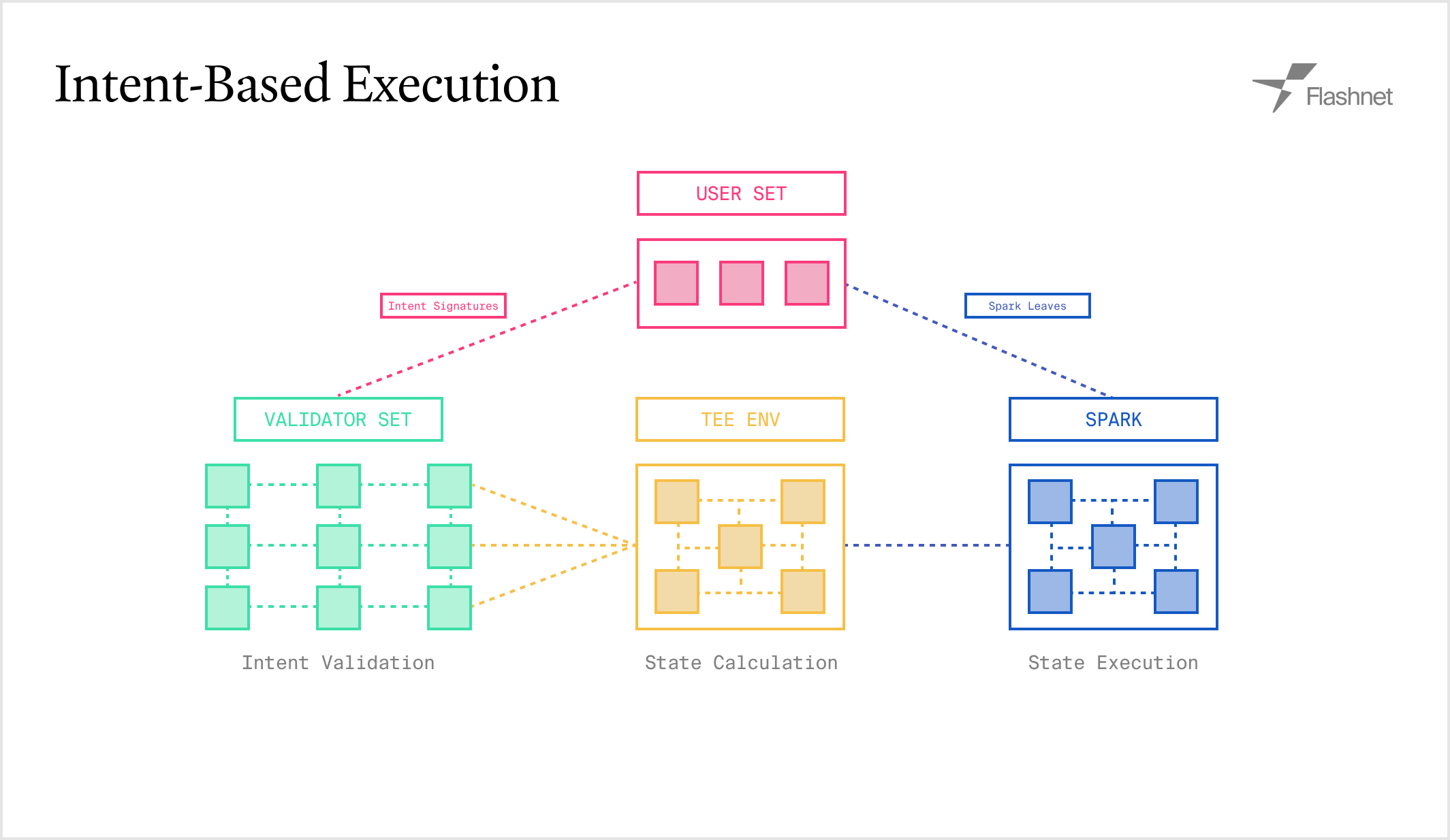
  • For the CLOB and the AMM, we combine TEEs and validators for intent-based execution at settlement. Funds stay in the user’s control, and trust is only required during execution.
How authority is split is in the trust model.

Core Primitives

Atomic Swap

The atomic swap is the fundamental building block of Flashnet. On Spark, atomic swaps are implemented using adaptor signatures, where the exchange is enforced by L1 validation and Bitcoin consensus rules. This creates a trustless exchange mechanism between two parties.

Intents System

Our intent-based execution engine is powered by validators operating within TEEs. All trading interactions are modeled as maker/taker relationships. The engine verifies that both parties have properly expressed their intent to trade and then settles the transaction according to the agreed terms. Two key design principles guide our intent-based execution environment:
  1. Minimal exposure window: Each execution environment is designed with the shortest possible lifecycle, ensuring funds are only exposed during the brief settlement period and not subject to long-term holding risks unless the user explicitly opts to hold. (market makers, LPing, etc. where it makes more sense to have a long-term exposure)
  2. Isolated MPC wallets: Rather than using a single shared MPC wallet, each user operates with multiple dedicated MPC wallets, ensuring that if one wallet is compromised, the others remain secure and isolated from system-wide risk.
This engine is at the core of Flashnet Trade and Flashnet AMM. Validators verify intents and co-sign the resulting Spark transactions. Flashnet gets programmable settlement without a VM: no bytecode, no gas, no global state. Security comes from the validator quorum and from Spark’s underlying exit guarantees.

AMM

Our AMM operates within our intent based execution environment, where liquidity providers interact through MPC wallets. Users can swap tokens or BTC, or contribute liquidity to these pools. The AMM supports constant product, custom bonding curves, and concentrated liquidity positions.

Centralized Limit-Orderbook

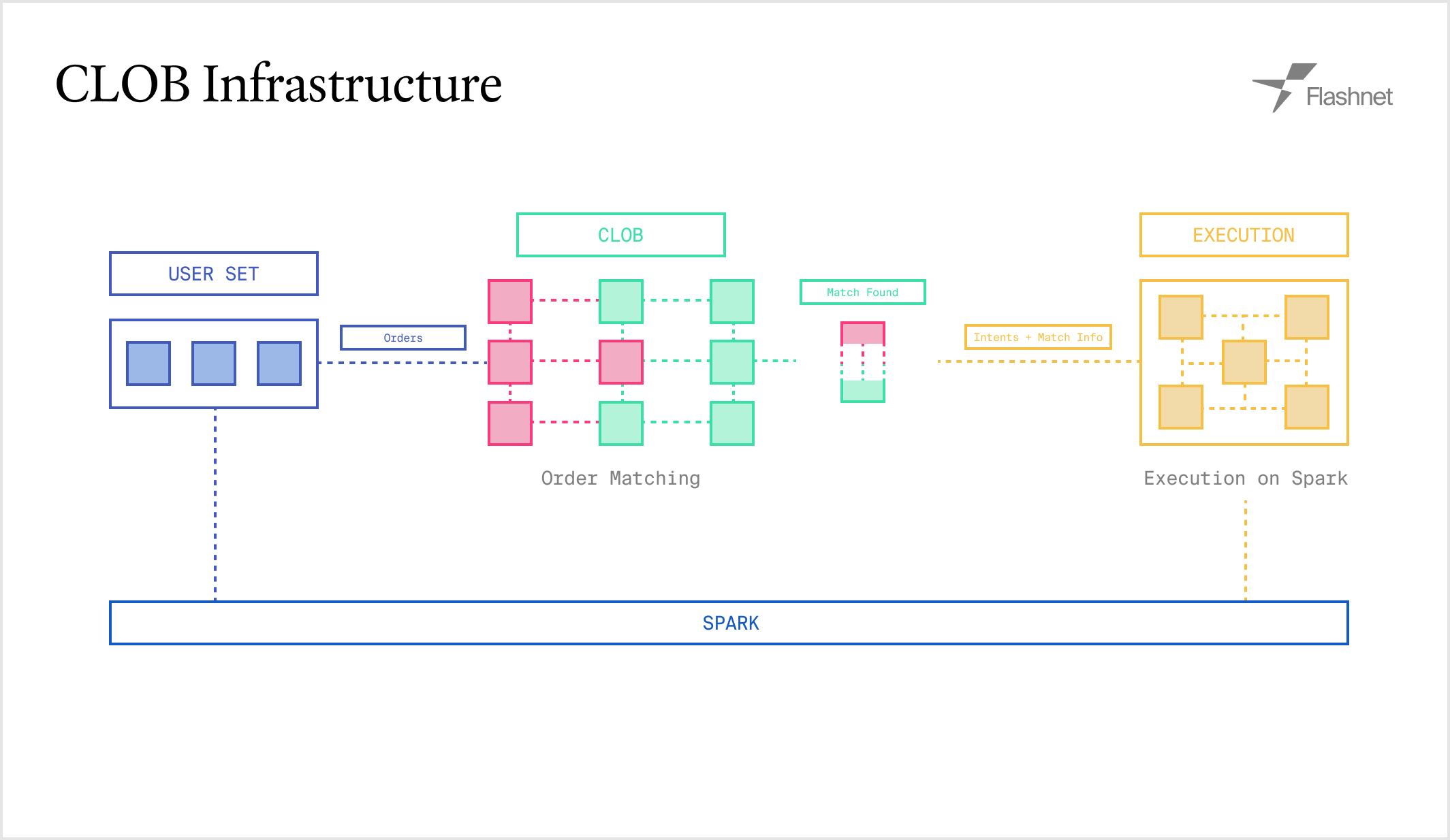
Flashnet Trade uses a price-time priority matching engine. Matched orders settle atomically on Spark. Key components include:
  • Settlement via our intent-based execution engine with validator oversight
  • User-controlled delegated trading wallets using threshold signature schemes
  • Safety mechanisms allowing users to:
    • Exit unilaterally to L1
    • Coordinate exit via Spark transaction
    • Cancel orders at any time to revoke approval and recover locked funds

Execution

Flashnet Execution is the runtime where the intent-based engine composes Spark settlements with deployed contract code. The runtime is EVM-compatible, so contracts compile with Solidity and standard tooling. Integrators sign one intent that moves assets in from Spark, runs an action (a market swap or your own contract), and dispatches the result back. See How it works for the sequencer, validator, and TEE design.